


ASSEMBLY PROCESS VERIFICATION

Assembly Monitoring AI for Correct Actions and Build Sequences

NAGARE AI brings assembly monitoring to the cameras already on your line. It checks components, operator actions and build sequences in real time, flags skipped steps while they can still be corrected, and retains video evidence of each cycle. Privacy-first by design, it uses no facial recognition or identity tracking—only the part and the process.

Get in touch

Trusted by manufacturers to improve quality on the line

THE PROBLEM

A Finished Assembly Cannot Tell You How Every Step Was Done

A cover can hide a missed fastening operation. A repeated action can disrupt the build. A checklist can show a tick without showing what happened. When checks only happen at the end, process errors have already travelled downstream.

Steps Get Skipped or Repeated

A missed action, duplicate operation or wrong sequence can leave a build incomplete even when the finished product looks right.

Corrections Come Too Late

By the time an error reaches final inspection, the affected joint may be covered and the unit may need to be opened, reworked and checked again.

The Record Shows a Result, Not the Work

A sign-off confirms that someone checked a box. Without execution evidence, quality teams have to reconstruct which operation went wrong and when.
The Solution

Verify the Assembly Process While the Work Happens

NAGARE AI checks visible components, operator actions and sequence adherence against your defined workflow. It connects what the camera sees with what the process requires, so the line can respond to a deviation while the build is still in progress.

Check the Action Alongside the Component

  • Confirm that the expected visible component is involved in the operation
  • Check that the required handling, placement or fastening action takes place
  • Follow manual and semi-automated work against the approved method
  • Flag a mismatch while the unit is still at the station
Components + actions
checked together
At the station
where corrections can still happen
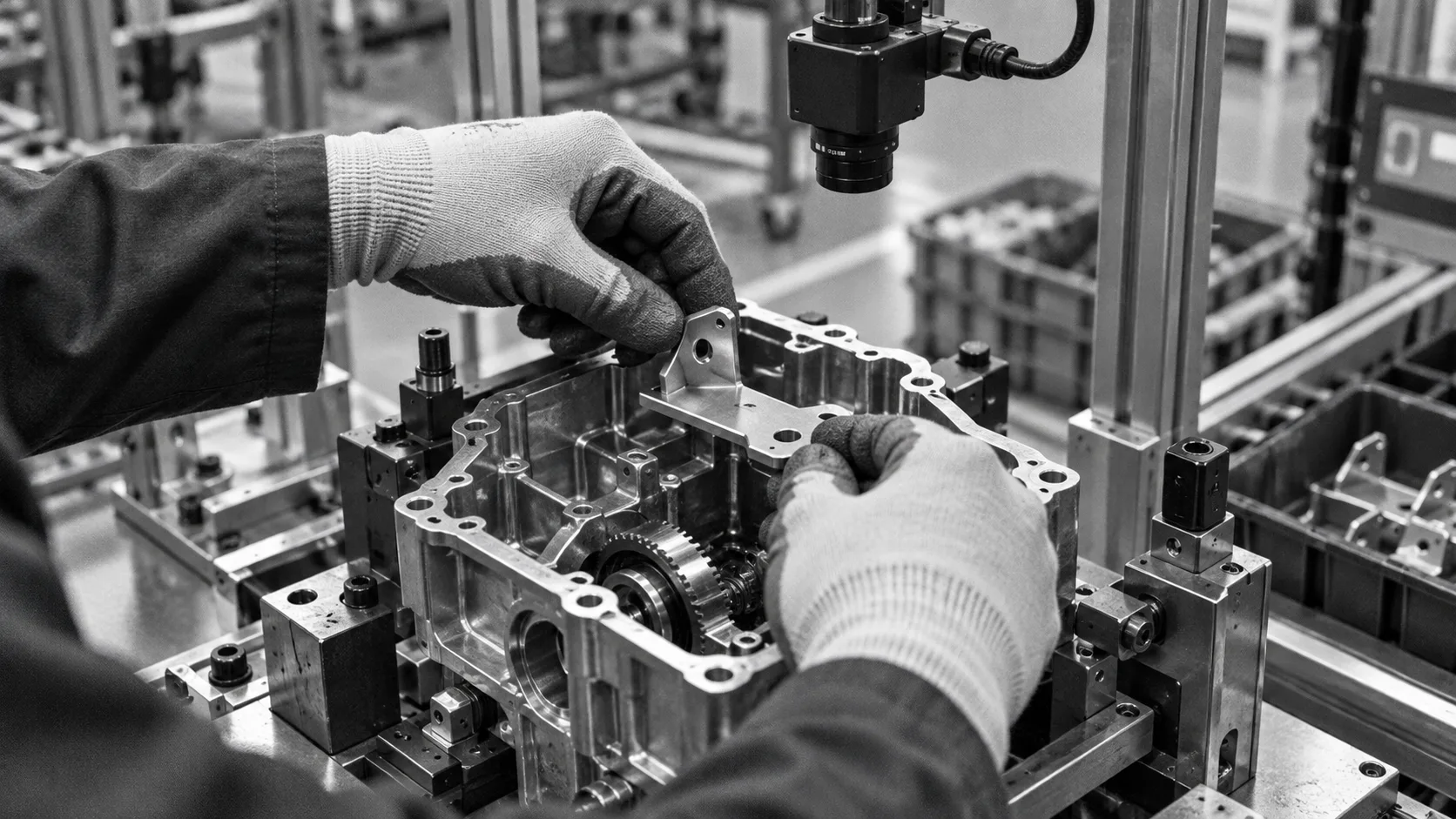
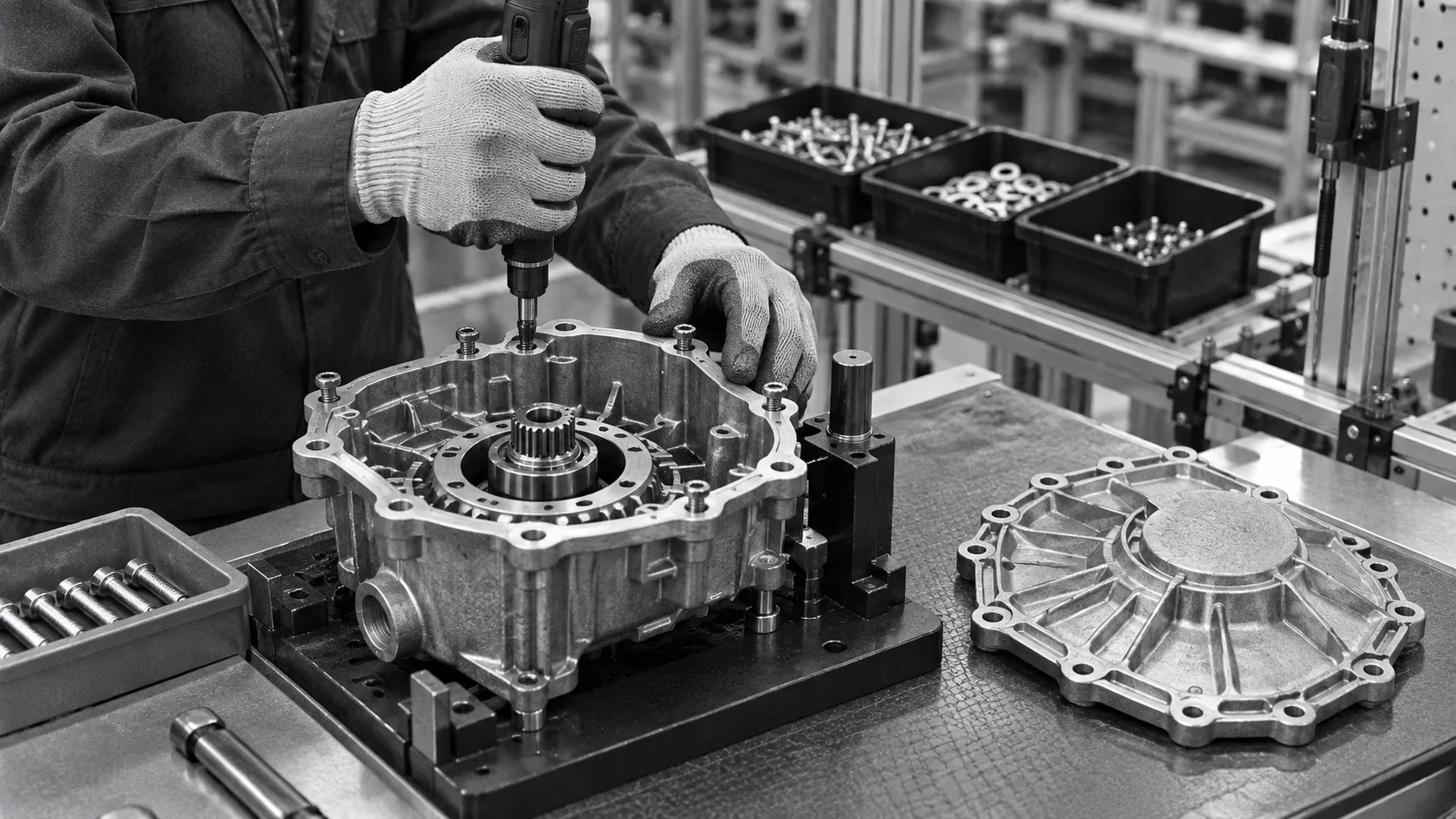
Monochrome illustration of a gloved operator positioning a bracket in an assembly fixture beneath a station camera
Monochrome illustration of a screwdriving operation on an open housing before its cover is fitted

Catch Skipped Steps and Sequence Errors

  • Compare observed operations with the required build sequence
  • Flag a missed step or unexpected repetition in the workflow
  • Check that dependent operations happen in the right order
  • Prompt a correction or escalate a deviation through the configured response
Sequence-aware
checks during the build
Defined responses
for process deviations

Keep Evidence of How Each Cycle Ran

  • Retain video evidence of the monitored assembly cycle
  • Review the work behind a process deviation or quality concern
  • Use recurring error patterns to improve methods and operator training
  • Keep video processing on premises with an edge deployment
Cycle-level evidence
for quality reviews
On-premises
video processing
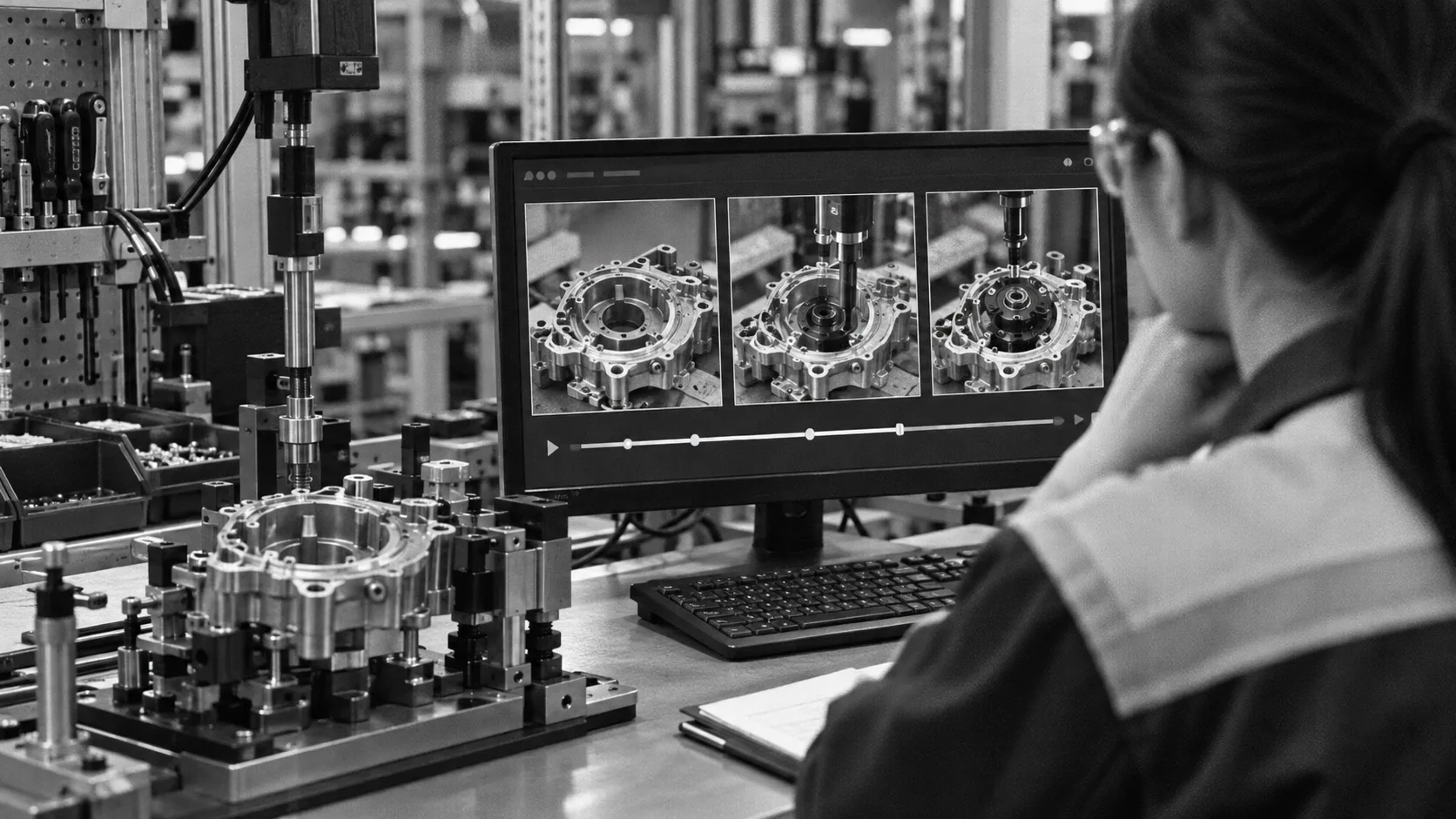
Monochrome illustration of a quality engineer reviewing video frames from an assembly cycle
DEPLOYMENT

Bring Verification to the Line You Already Run

Start with your existing station cameras and the workflow your team follows today. Confirm visibility, train on your process and validate the checks on the line before putting them into operation.

STEP 01

Line Audit & Camera Mapping

We review the assembly sequence, identify critical operations and check whether your cameras can see the components and actions that need verification.

STEP 02

Model Training on Your Process

The model trains on your actual assembly work and product variants. NAGARE’s training requirement is 120 minutes of footage, with capture planned around the operations in scope.

STEP 03

Go Live, Verified

We validate the checks alongside your current process before rollout. NAGARE’s deployment benchmark is 4 weeks, with ROI payback in 6–12 months. Line scope and integration needs are confirmed during the audit.

Connect with us

Bring your assembly sequence and the mistakes you want to catch earlier. We will map the verification points on your line.

Get In Touch
35%Rework reduction
20%Reduction in process time
+15%Yield increase
30%Reduction in downtime

Platform benchmarks; outcomes depend on the application, baseline and deployment scope.

What Changes When You Add NAGARE

A process check needs to answer more than whether the finished assembly looks correct. It needs to show which operations happened, in what order, and where the line should respond to a deviation.

Dimension
Manual checks and sign-offs
Conventional inspection at a fixed checkpoint
NAGARE
What is checked
What the operator or inspector observes and records
Visible product condition at the inspection point
Visible components, operator actions and sequence adherence
When deviations surface
During observation or a later inspection
When the unit reaches the configured checkpoint
During the monitored operation or sequence
Skipped or repeated steps
Depend on observation and record accuracy
May leave no visible difference in the final image
Checked against the defined workflow
Evidence for review
Checklists and recorded observations
Images and inspection results, where configured
Video evidence of the monitored cycle
Corrective response
Depends on the person noticing and acting
Reject, alarm or hold, where configured
Prompts or escalation through the configured process response
Setup requirements
Clear instructions, training and supervision
Suitable imaging, fixtures and inspection rules
Camera coverage, process training and validated workflow checks

Frequently Asked Questions

Assembly process verification checks whether the required operations happened correctly and in the approved order while a product was being built. NAGARE compares visible components and operator actions with the defined workflow. It helps teams identify deviations at the station, where they can correct the process before the affected unit moves further downstream.

An assembly process is the series of operations used to join components into a finished product or subassembly. It can include positioning, inserting, fastening and checking parts. Standard work defines how those operations should be performed. Verification checks execution against that definition, rather than assuming a completed product means every required operation happened correctly.

Effective assembly monitoring starts with a defined workflow, clear acceptance rules and a camera view of each critical action. NAGARE analyses station video against those rules and flags deviations. During setup, engineers check lighting, component visibility and operator movement. Steps hidden behind hands, fixtures or enclosures may need a different view or another verification method.

An assembly sequence is the approved order for completing the operations in a build. Some steps depend on earlier work, such as fastening a part before fitting its cover. Assembly sequence verification checks those dependencies during execution. It helps distinguish an acceptable variation from an operation performed too early, too late or out of order.

Start with clear, current instructions and measurable acceptance criteria for each critical step. Train operators, observe execution and make deviations actionable at the station. NAGARE supports SOP adherence by checking visible work against the approved workflow. It complements supervision and training; documented procedures still need process ownership, version control and updates when the method changes. An SOP describes the procedure; detailed work instructions help an operator carry out a particular task consistently.

Yes, where the required actions are visible and the workflow has been configured to recognise them. Missing operation detection checks for absent steps, while sequence rules can identify unexpected repetition. Cycle completion verification checks whether the required sequence reached its defined endpoint. Ambiguous footage needs review; an unseen action should not automatically be treated as completed.

A camera can support fastening verification by checking whether a visible screwdriving action occurred at the expected point in the sequence. It cannot establish the torque or angle achieved inside the joint from appearance alone. Those measurements require suitable tool or sensor data. Scope any connection between that data and the video record with the engineering team.

Digital traceability connects production records so teams can investigate how a unit was made. Video traceability adds footage of the work, helping quality teams review the relevant cycle and understand a deviation. NAGARE retains process evidence on premises. Its privacy-first design uses no facial recognition or identity tracking; verification focuses only on the part and the process. Product identifiers, retention periods, access permissions and links to existing production systems should be defined during deployment. Agree who can review footage and how long records remain available for investigation.

Assembly verification can refer to checking the finished assembly or checking the operations that produced it. NAGARE addresses the process: actions, sequence and execution evidence. KOMPASS’s Assembled Component Verification addresses the product: whether the assembled components meet the defined inspection criteria. The two approaches can complement each other, but they answer different quality questions.

NAGARE supports manual and semi-automated operations where cameras can observe the relevant components and actions. Assembly process monitoring can cover a single station or a defined sequence of stations, depending on scope. Suitability depends on the actual workflow, camera coverage and required decisions. Validate each product variant and critical step before extending the system across lines.

First time right manufacturing means completing work correctly without needing rework or correction. Assembly error prevention supports that goal by identifying process deviations while correction is still possible. NAGARE helps teams respond to missed actions and sequence errors during the build. Results depend on the process, the checks configured and how the line responds to alerts. Measure improvement against your own rework, defect and process completion baseline before expanding deployment.

相談会開催中

品質と生産性を最大化するビジョン検査システムに関する相談会を実施中です。ぜひこの機会にお試しください。

連絡を取る